Divergence was discovered in growth and climatic response of spruce on the Borus Ridge, Western Sayan
10.11.2018
In mountain ecosystems, plants are sensitive to climate changes, and an entire range of species distribution can be observed in a small area. Therefore, mountains are of great interest for climate–growth relationship analysis.
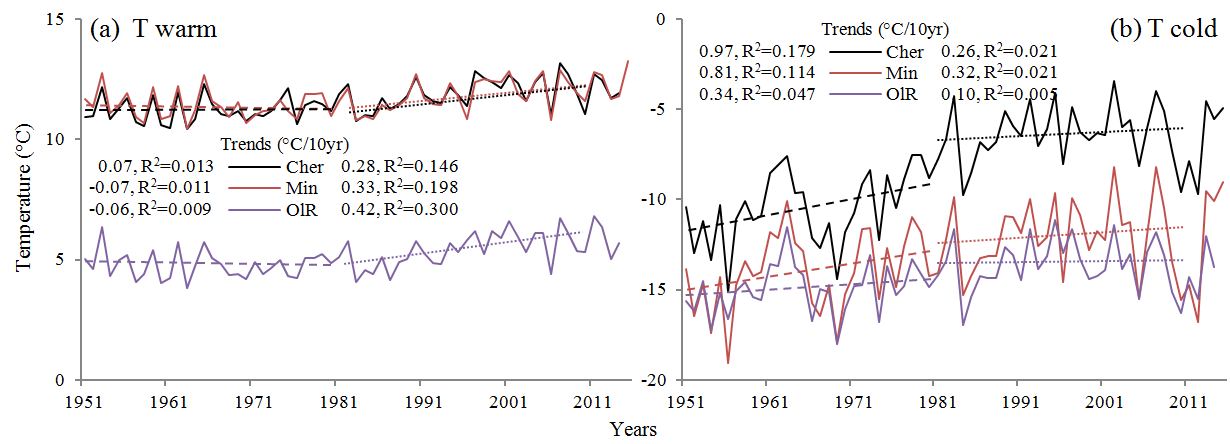
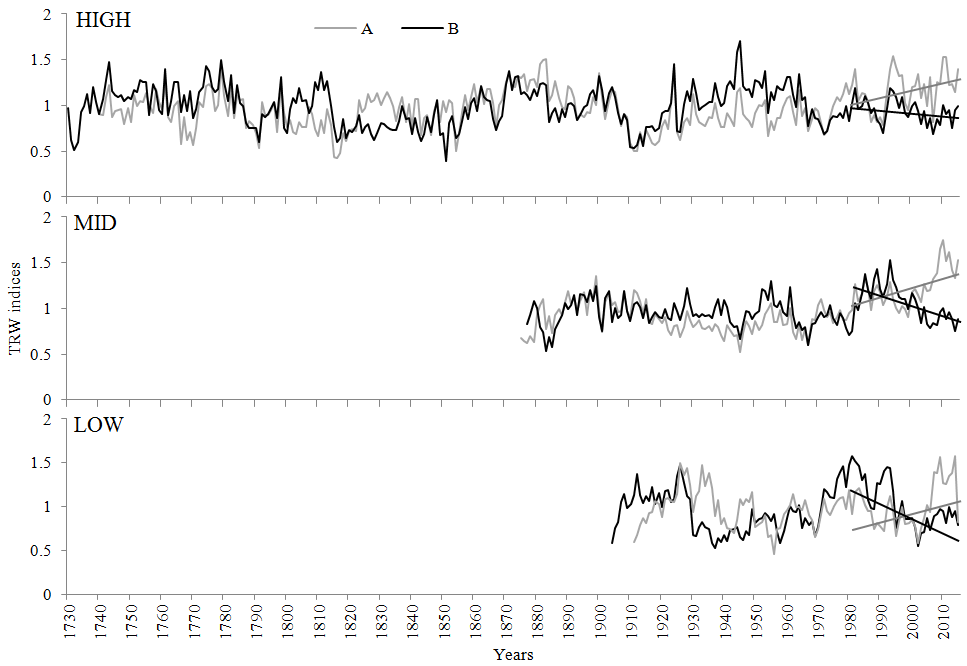
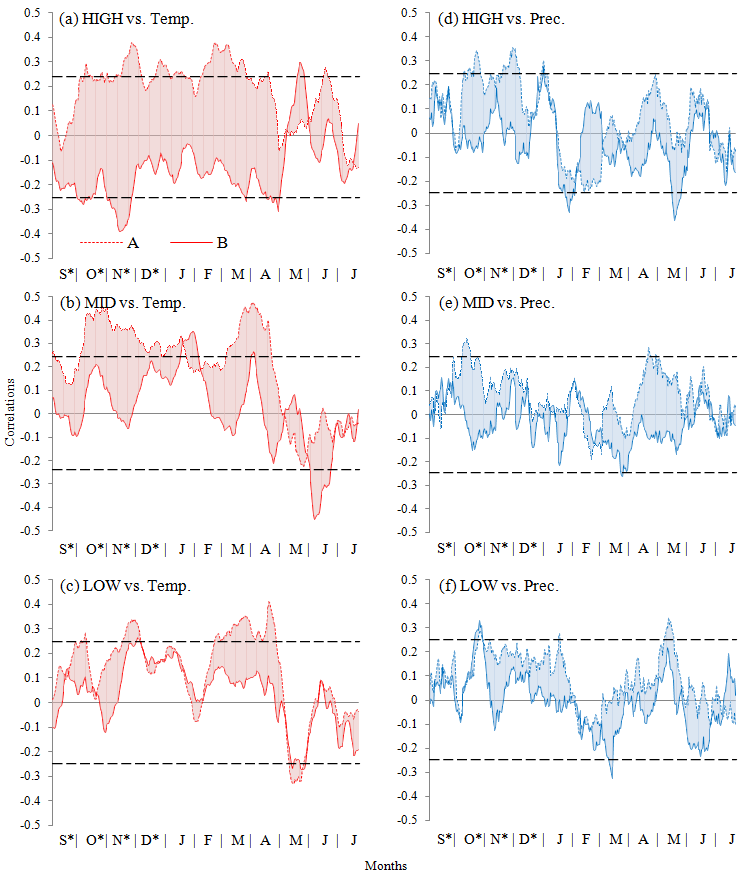
In this study, the Siberian spruce’s (Picea obovata Ledeb.) radial growth and its climatic response were investigated in the Western Sayan Mountains, near the Sayano-Shushenskoe Reservoir. Sampling was performed at three sites along an elevational gradient: at the lower border of the species range, in the middle, and at the treeline. Divergence of growth trends between individual trees was observed at each site, with micro-site landscape-soil conditions as the most probable driver of this phenomenon. Cluster analysis was carried out, resulting in two sub-set of trees for each site. Their radial growth has substantial difference in the climatic response, mainly during the cold season. This response is unstable due to regional climatic change and the local influence of the nearby Sayano-Shushenskoe Reservoir. The main response of spruce to growing season conditions has a typical elevational pattern expected in mountains: impact of temperature shifts with elevation from negative to positive, and impact of precipitation shifts in the opposite direction. Trees growing under more severe micro-conditions are very sensitive to temperature during September–April and to precipitation during October–December, and they record both inter-annual and long-term climatic variation.
More details will be available soon in the manuscript titled “Divergent growth trends and climatic response of Picea obovata along elevational gradient in Western Sayan mountains, Siberia” that is accepted to publication in the Journal of Mountain Science (China, Germany).